YourLibet · Sexual Wellness
I used to think orgasms were simple. You feel good, something happens, and then it’s over. But when I started digging into the actual science behind what goes on in your brain and body during those few incredible seconds — I was completely floored.
Because here’s the thing: an orgasm isn’t just a physical release. It’s a full-blown neurological event.
Your brain on orgasm
It’s more than you think
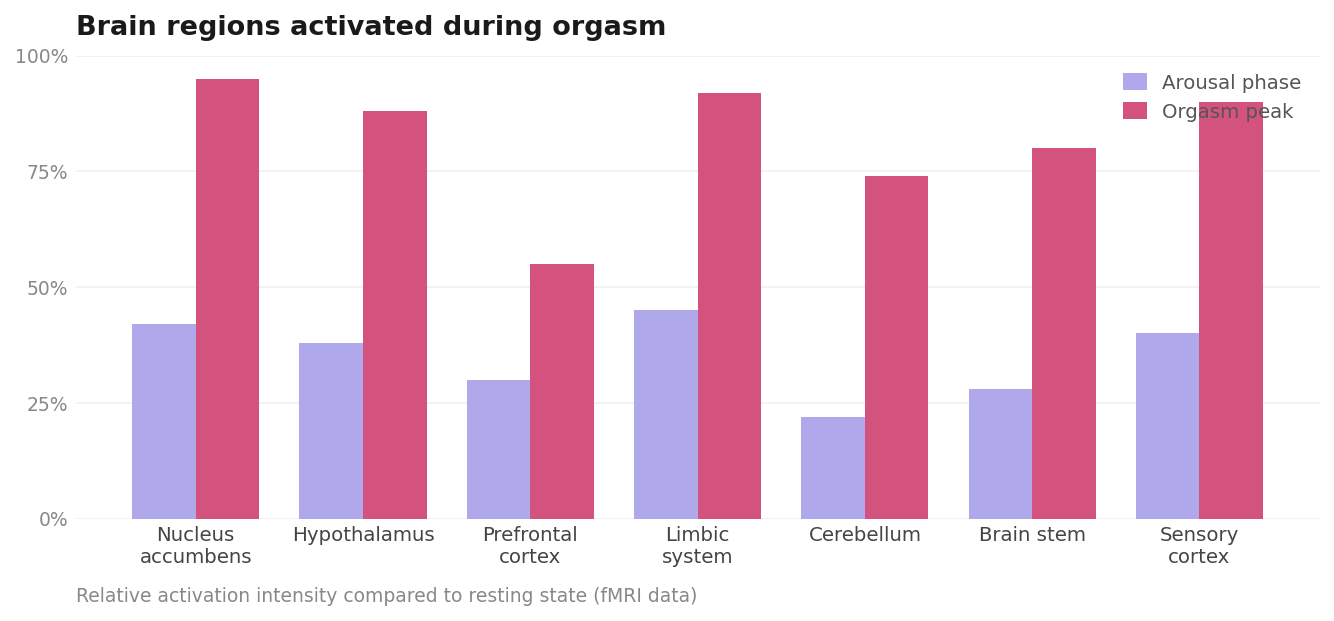
When you orgasm, every single part of your brain lights up at once. Dr. Barry Komisaruk, a neuroscientist at Rutgers University who has spent decades studying orgasm using fMRI brain imaging, describes it as essentially a whole-brain experience.[1] Most pleasurable activities activate just a few brain regions. Orgasm? All of them. Simultaneously.
So if you’ve ever felt like your mind went completely blank for a moment — that’s literally what’s happening. Your brain is so flooded with activity that the part responsible for self-consciousness and worry (the prefrontal cortex) actually quiets down. You stop overthinking. You stop judging. You’re just there.
Brain regions activated during orgasm
Relative activation intensity compared to resting state (fMRI data)
The hormone cocktail
Nobody taught you about this in school
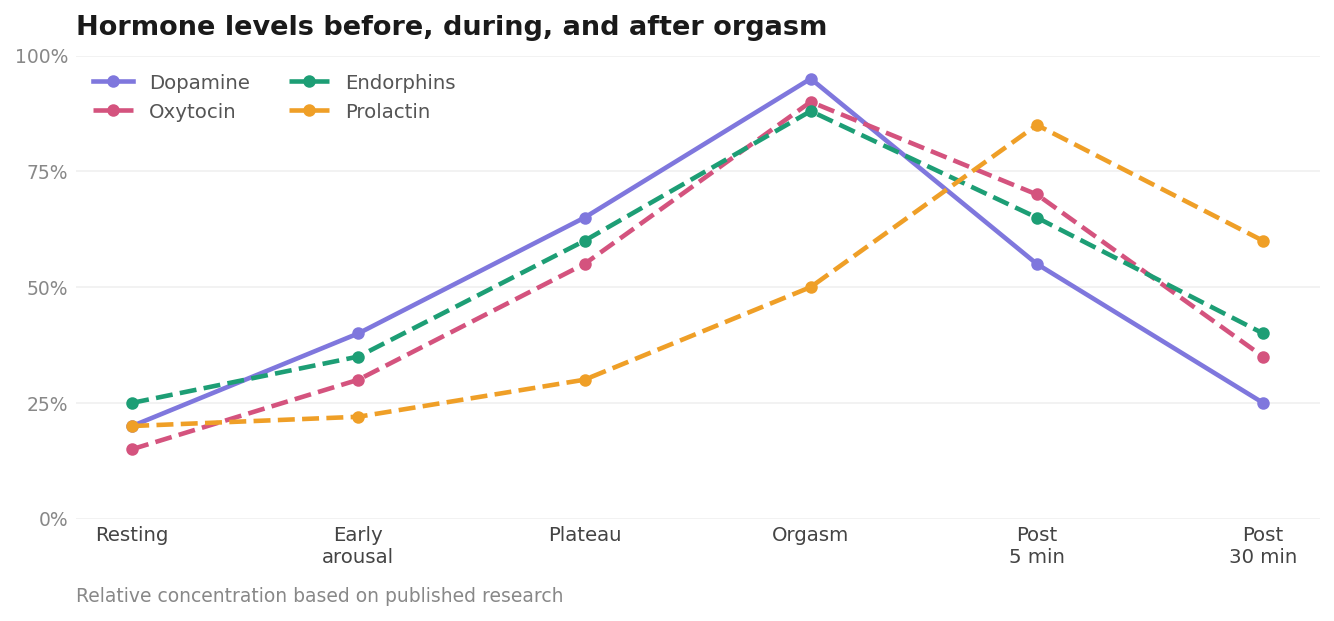
During orgasm, your body releases a cascade of hormones and neurotransmitters that would make a pharmacist jealous. Here’s who does what:[3,4]
Hormone levels before, during, and after orgasm
Relative concentration based on published research
Your body during orgasm
A sequence of events
While your brain is having its fireworks show, your body is doing its own thing — and it starts well before the peak.[6]
Heart rate increases, blood pressure rises, blood rushes to the genitals. The clitoris engorges and vaginal walls begin self-lubricating.
Muscle tension builds throughout the body — thighs, core, hands, feet. The brain’s prefrontal cortex begins to quiet; dopamine floods the reward system.
Rhythmic muscle contractions occur approximately every 0.8 seconds in the vagina, uterus, and pelvic floor. Pain threshold increases dramatically.
Prolactin and oxytocin flood the system. Heart rate drops, muscles relax, and that deep post-orgasm calm — the “afterglow” — sets in.
The altered state
Nobody talks about this enough
One of the most fascinating (and underreported) things about orgasm is that it can produce something close to an altered state of consciousness.
Neuroscientist Dr. Adam Safron found that rhythmic sexual stimulation can actually synchronize neural activity across the brain — similar to what happens during meditation, deep music experiences, or even dancing.[2] When stimulation continues long enough, this synchronization spreads throughout the brain, making you more focused and more present than almost any other moment in daily life.
In other words: orgasm isn’t just pleasure. It’s one of the most profound states of presence the human brain can achieve.
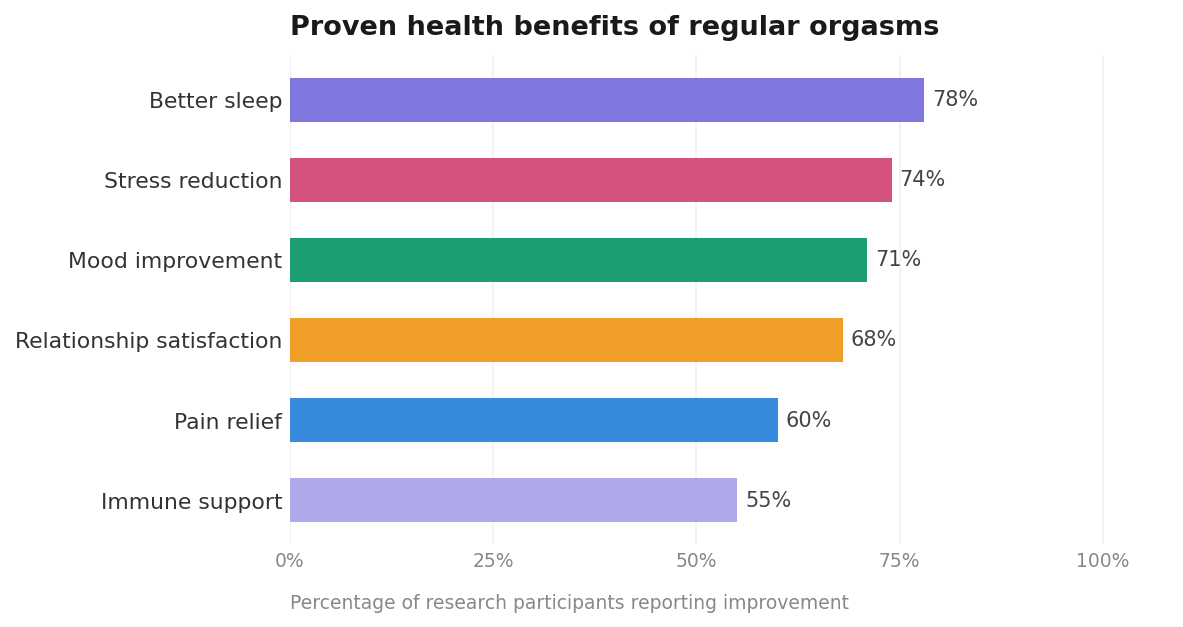
Proven health benefits of regular orgasms
Percentage of research participants reporting improvement
Why this matters for you
The practical takeaway
Reading the science is one thing. But here’s what I think matters most: understanding what’s happening in your body during arousal and orgasm gives you power.
- ✨ Orgasms are genuinely good for your health — sleep, mood, pain levels, and emotional wellbeing.
- ✨ Knowing what your body responds to isn’t indulgent — it’s intelligent self-care.
- ✨ The more you understand your own responses, the better you can communicate them — to yourself and to a partner.
That’s exactly why at YourLibet, we believe pleasure and self-knowledge go hand in hand. Not as a luxury. As a foundation.
Because the science is clear: your body is designed for this. Your brain is wired for this. The only thing missing is the permission to explore it.
Now go give yourself that permission — and I’ll see you in the next post.
Sāra, YourLibet Co-Founder
References
[1] Komisaruk, B.R. et al. Brain Activity Unique to Orgasm in Women: An fMRI Analysis. Journal of Sexual Medicine, 2011. View study ↗
[2] Safron, A. What is Orgasm? A Model of Sexual Trance and Climax Via Rhythmic Entrainment. Socioaffective Neuroscience & Psychology, 2016. Overview ↗
[3] Pfaus, J.G. et al. Neurochemistry of Sexual Pleasure and Orgasm. Sexual Medicine Reviews, 2025. View paper ↗
[4] Femia Health. What Hormone is Released During Orgasm? 2025. Read article ↗
[5] Hambach, A. et al. The Impact of Sexual Activity on Idiopathic Headaches. Cephalalgia, 2013. Via Ask Tia ↗
[6] Science News Today. The Science of Pleasure: How Your Brain and Body Experience Orgasm. 2025. Read article ↗
[7] Vella Bio. Sex and Mental Health: How Orgasms Boost Brain Health. 2025. Read article ↗
[8] Bonafide Health. Orgasm Benefits You Might Not Know. 2024. Read article ↗


Leave a Reply