Let me tell you a little secret: the first time I recommended a vibrator to a friend, she lowered her voice like we were planning a heist. ✨ And honestly? I get it. For generations, women were handed the idea that wanting pleasure — let alone reaching for a little help to find it — was something to whisper about. So today I want to do the opposite of whisper. I want to sit down with you, friend to friend, and talk about what the actual research says about vibrators and your sex life. Spoiler: it’s a lot more affirming than you’ve been led to believe.
First, the truth: vibrators are completely, wonderfully normal
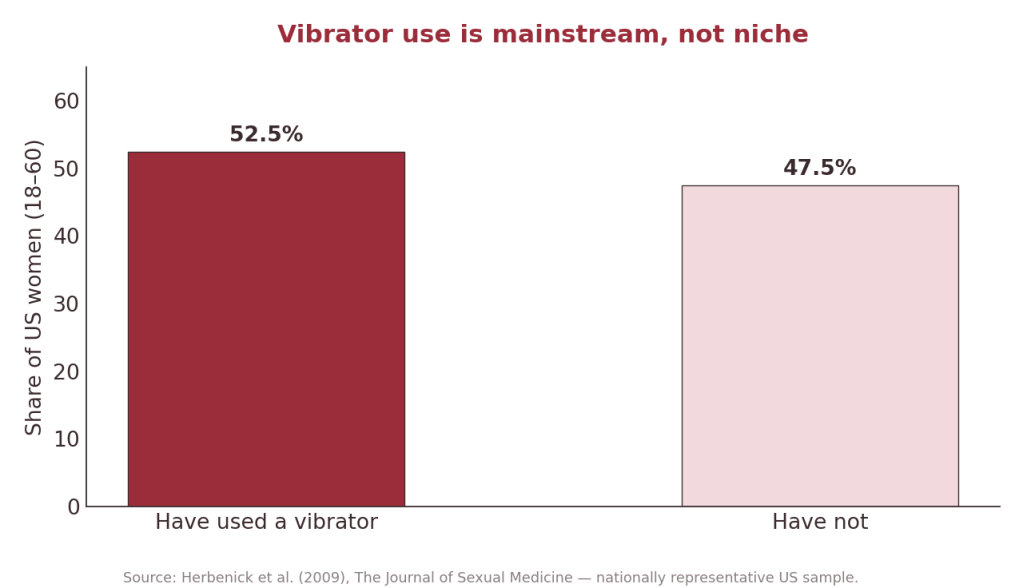
If you’ve ever felt like you’re the only one, I need you to hear this. In a nationally representative study of American women, researchers found that 52.5% of women aged 18 to 60 had used a vibrator. That’s more than half of us. Your neighbor, your coworker, the woman who cuts your hair — statistically, this is as common as it gets. Using a vibrator isn’t a quirk or a last resort. It’s one of the most ordinary things a woman can do for her own pleasure.
What the research actually says about vibrators and your body
Here’s where it gets genuinely exciting. That same landmark study didn’t just count how many women use vibrators — it looked at how those women were doing. And it found that recent vibrator use was linked to more positive sexual function across nearly every domain researchers measure: desire, arousal, lubrication, and orgasm. In other words, the women reaching for a vibrator weren’t “broken” and looking for a fix. They tended to report a richer, more responsive relationship with their own bodies.
Later reviews of women’s sexual health echo this: vibrators can shorten the time it takes to reach orgasm and help some women experience multiple orgasms. Think of a vibrator less like a shortcut and more like a really good teacher — it shows your body what’s possible, and that knowledge stays with you.
The orgasm breakthrough nobody talks about
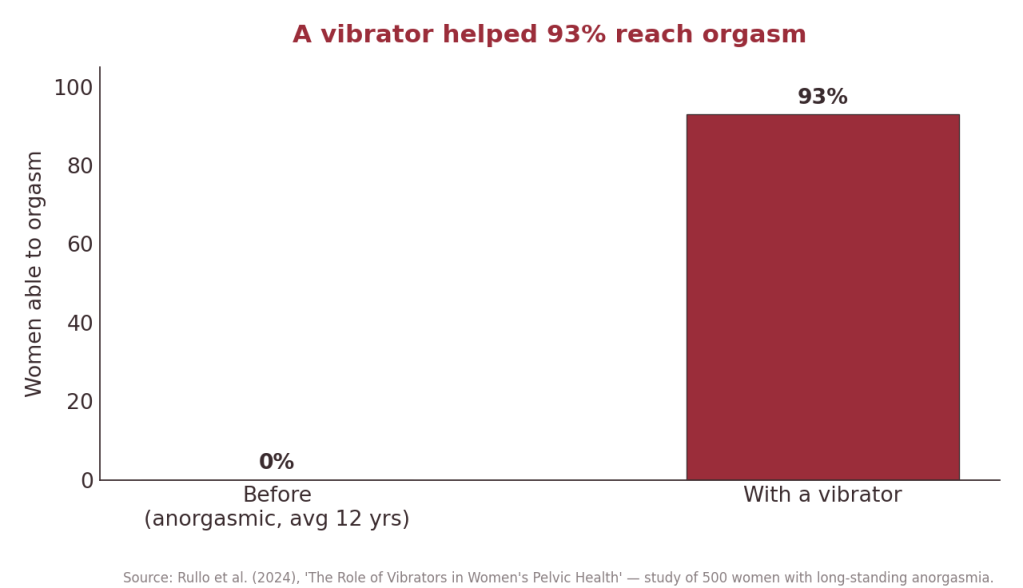
This is the statistic that gives me chills every time. In a study of 500 women who had experienced anorgasmia — the inability to reach orgasm — for an average of twelve years, 93% were able to orgasm with the help of a vibrator. Twelve years of feeling like something was wrong, and then a device designed for pleasure quietly changed the story. If you’ve ever wondered whether you’re “the problem,” please let that number sink in. So often it isn’t you. It’s just that no one ever handed you the right tools — or the permission to use them.
But are they actually safe?
Short answer: yes, for the vast majority of women. In the nationally representative study, 71.5% of women reported never having experienced any genital symptoms connected to vibrator use, and researchers concluded that vibrators are rarely associated with side effects. The occasional numbness or mild irritation some women noticed was typically short-lived. As always, use a body-safe material, a little water-based lubricant, and clean your toy properly — and you’re taking wonderful care of yourself.
A few gentle tips if you’re curious
- Start low and slow. Begin with the gentlest setting. This is about discovery, not intensity — you can always turn things up.
- Explore beyond the obvious. The clitoris has thousands of nerve endings, but so do the surrounding areas. Let yourself wander.
- Take the pressure off. You don’t need a goal. Sometimes the most freeing sessions are the ones where you’re just… curious.
- Bring it into partnered sex, if you want. A vibrator isn’t competition for a partner — research on couples suggests it can enhance the experience for both of you.
Vibrators, by the numbers
| What the research found | The number |
|---|---|
| US women (18–60) who have used a vibrator | 52.5% |
| Long-term anorgasmic women who reached orgasm with a vibrator | 93% |
| Women who reported never experiencing genital symptoms from use | 71.5% |
| Sexual-function domains linked to more positive scores in recent users | Desire, arousal, lubrication & orgasm |
Where YourLibet comes in
Everything I’ve shared points to one quiet truth: pleasure is personal, and the more your body is understood, the better it responds. That’s the whole reason we’re building YourLibet — an AI-powered device that actually learns what you like, instead of asking you to figure it out alone in the dark. The research above is exactly why I do this work. You deserve tools built around your body, your data, your pleasure. ✨
So if you’ve been curious, take this as your friendly permission slip. The science is on your side. So am I. 💛
— Sāra, YourLibet Co-Founder
References
- Herbenick D, et al. (2009). “Prevalence and Characteristics of Vibrator Use by Women in the United States: Results from a Nationally Representative Study.” The Journal of Sexual Medicine. Read the study
- Rullo J, et al. (2024). “The Role of Vibrators in Women’s Pelvic Health: An Alluring Tool to Improve Physical, Sexual, and Mental Health.” PMC / National Library of Medicine. Read the review
- Indiana University / ScienceDaily (2009). “Vibrator Use Common, Linked To Sexual Health.” Read the summary


Leave a Reply